Concrete Pool Deck Resurfacing: Elevate Your Outdoor Space
Revitalize your outdoor space with expert concrete pool deck resurfacing, offering cost-effective and stylish solutions that cool and beautify your patio.
POOL DECK RESURFACING NEAR ME
5/18/20266 min read
Benefits of Concrete Pool Deck Resurfacing
You love your pool, but you probably dread the barefoot sprint across concrete that feels hot enough to fry an egg. If your backyard oasis suffers from ugly stains and minor cracks, you don’t need to bring in the jackhammers. Consider concrete pool deck resurfacing, which acts like a stunning facelift for your outdoor space.
Industry data reveals a massive financial advantage to this approach, as the average pool deck renovation cost vs replacement runs roughly $5 per square foot compared to $15 for full demolition. Contractors achieve this using polymer-modified overlays—a flexible super-glue and concrete hybrid that aggressively bonds to your existing patio. This durable new layer hides old damage while providing an impressive 10 to 15 years of renewed life.
Beyond just looking beautiful, modern pool deck refinishing solves the burning-feet problem through advanced heat reflectivity. Specialized materials bounce the sun's rays away, providing essential thermal comfort so your family can walk safely at high noon. Transforming a scorching slab into a resort-style retreat is highly achievable.
Is Your Deck a Candidate? How to Spot the Difference Between Surface Aging and Structural Failure
Have you noticed a crack getting wider every winter? Before looking up how to fix cracks in pool deck surfaces, determine if the concrete is just aging or actively failing. Hairline surface cracks are easily fixable, but shifting slabs mean full replacement. Try the "Penny Test": if a penny fits inside the gap easily, you have a structural concern, not just a cosmetic flaw.
Check your concrete for these four undeniable red flags:
● Structural cracks wider than a quarter-inch.
● Hollow sounds when tapped, indicating the top layer is separating (a process called delamination).
● Standing water issues pointing to sunken, poorly draining areas.
● Severe soil settlement causing uneven tripping hazards.
That flaking, chipped surface you might see is called spalling, and ignoring it is like skipping a cavity filling at the dentist. When repairing spalled pool deck concrete, you are actually stopping water from rusting the inner steel rebar. This decay is often driven by moisture vapor transmission in pool decks—invisible upward pressure from damp ground that pushes through the slab and eventually blisters new topcoats.
Once you confirm your backyard oasis is structurally sound, you can explore various materials and finishes to achieve the perfect balance of comfort and style.
Cool Feet and Sharp Looks: Choosing Between Acrylic Sprays and Polymer Overlays
Imagine hosting a summer barbecue where guests can actually walk barefoot without doing a painful sprint to the water. Achieving this comfort comes down to choosing the right material, specifically heat reflective cool deck paint or coatings that utilize a "knockdown texture." This technique involves spraying a specialized coating and lightly troweling the peaks flat, creating tiny pockets of air underneath your feet. The result is a surface that stays noticeably cooler in direct sun while acting as a built-in safety mat for wet, running feet.
Traditional concrete is notoriously rigid, meaning it easily cracks when the ground naturally shifts during seasonal freezes and thaws. To solve this, manufacturers created polymer-modified cementitious overlays. Think of this material as a hybrid between standard concrete and super-glue. The added polymers make the mixture highly flexible and incredibly sticky, creating the ideal foundation for slip-resistant pool deck coatings that must survive harsh winters without shattering.
Selecting the perfect finish depends heavily on your local climate and backyard aesthetic. When comparing your options, keep these three popular choices in mind:
● Kool deck vs acrylic finishes: Classic Kool Deck offers maximum heat resistance for scorching climates, but a modern decorative acrylic spray texture is generally preferred today because it cures stronger and bonds better to existing concrete.
● Acrylic Sprays: Packed with UV-stable pigments, these modern coatings refuse to fade or yellow in harsh sunlight, making them perfect for colorful, high-traffic kid zones.
● Stamped Overlays: Though slightly more expensive, these thick polymer blends can be stamped to beautifully mimic high-end flagstone or wood planks.
Picking out your dream finish is definitely the most exciting part of the project. However, even the most expensive, fade-resistant acrylics will peel if applied over a poorly prepped slab. Long-lasting results require meticulous surface preparation.
The Professional 4-Step Transformation: Why Preparation Is 90% of the Battle
Slapping new material over a dirty patio guarantees failure. Proper surface preparation for concrete coatings goes far beyond a simple pressure washing. Professionals use a grinder to physically scratch the surface—a technique called mechanical profiling. This rough texture acts like microscopic teeth, giving the new material something physical to grip so it won't peel away under heavy foot traffic.
Addressing the slab's structural health directly answers a common question: how long does a pool deck overlay last? Longevity depends heavily on respecting expansion joints, which are the intentional straight lines cut into your concrete giving it room to swell during summer heatwaves. Repairing random, jagged damage while keeping these crucial joints clear prevents natural ground shifts from shattering your freshly poured surface.
Navigating the various pool deck resurfacing options requires following The 4-Step Sequence:
1. Mechanical Grinding/Cleaning: Stripping away old debris and opening the concrete's pores.
2. Crack Repair & Priming: Applying a liquid "tack coat" primer that chemically welds the old slab to the new overlay.
3. Overlay Application: Spreading the specialized mixture quickly before its "pot life" (the short window of time before it permanently hardens in the bucket) expires.
4. Protective Sealing: Locking out harsh pool chemicals and UV rays.
Once this bulletproof foundation cures, the surface is ready for decorative coloring and stamping techniques.
Beyond Gray: High-End Aesthetics with Stamped Overlays and Custom Stains
Transforming that freshly prepped slab is where decorative concrete pool deck finishes shine. When evaluating a stamped concrete overlay vs pavers, overlays offer one massive advantage: zero structural joints for weeds to sprout through. You get the luxurious appearance of stone on a continuous, weed-free surface. Achieving this realism relies on two specific coloring methods. First, an "integral color" is mixed entirely through the wet cement to provide a solid base shade. Next, a liquid "topical stain" is sprayed over the top, naturally pooling in the stamped grooves to create the 3D shadows and depth of real rock.
Homeowners can customize this versatile material to match virtually any architectural vibe. The top three decorative styles include:
● Flagstone mimicry: Organic, irregular shapes blending seamlessly with natural landscaping.
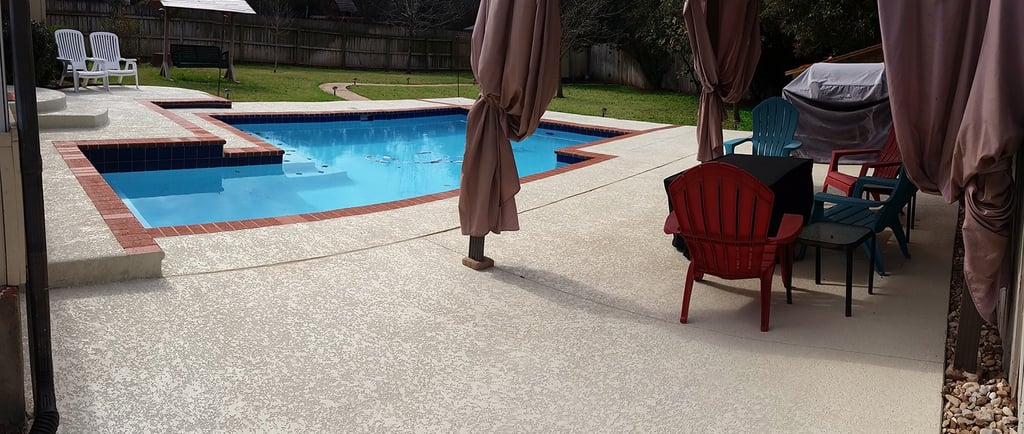
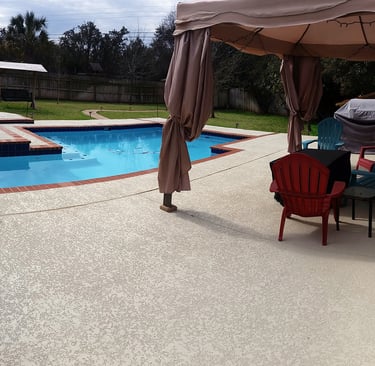
● Mediterranean knockdown: A splattered, textured finish that stays remarkably cool under bare feet.
● Modern seamless slate: A sleek, low-profile texture offering a clean, contemporary look.
Harsh summer sunlight will quickly fade those beautiful custom stains if they are left unprotected. Applying a premium UV resistant pool deck sealer acts exactly like clear sunscreen for your concrete, locking in rich colors while repelling damaging chlorine. Once this invisible barrier dries, keeping your backyard resort looking pristine requires only minimal routine maintenance.
Maintenance and Longevity: Protecting Your Investment for the Long Haul
Proper swimming pool deck resurfacing isn't just about curb appeal; it’s a massive financial asset. Consider the long-term ROI: spending just $500 on routine maintenance over ten years easily prevents a grueling $15,000 complete concrete replacement.
Knowing exactly when to maintain that surface requires nothing more than a glass of water. Professional pool deck resurfacing contractors swear by the "Sealer Bead Test." Simply splash a handful of water onto the concrete. If it beads up like rain on a freshly waxed car, your invisible barrier is strong. If the concrete absorbs the water and turns dark, you need to reseal immediately. Homeowners frequently ask, "can you resurface a painted pool deck?"—and whether you have a premium stone overlay or updated paint, keeping that clear sealer intact is what prevents peeling.
Routine cleaning demands the right chemistry. You must only use pH-neutral cleaners, because harsh acidic chemicals will literally eat away your protective topcoat. Keep your deck pristine with this seasonal maintenance checklist:
● Wash away dirt with a mild soap wash.
● Perform a visual inspection for sealer wear using the bead test.
● Avoid using harsh de-icing salts during winter months.
Consistent care ensures your resurfaced deck remains safe and beautiful for seasons to come.
Your Resort-Ready Action Plan: Next Steps for a Perfect Pool Season
You no longer have to view those cracked, hot surfaces as a permanent eyesore. You are now fully equipped to plan a successful pool deck renovation. First, take a simple next step: pour a cup of water on your concrete to test for an existing sealer. If it beads up, you will need to remove it.
When interviewing professionals for your pool deck resurfacing, ask three vital questions: what specific surface prep they include, if they use flexible polymer-modified materials, and what warranty they provide. Always schedule this project during the "Goldilocks" temperature window of fifty to eighty degrees for perfect material bonding.
Instead of dreading the walk across blistering concrete, you can transform your deck into a stunning, heat-reflective surface. By understanding the structural health of your concrete and choosing the right materials, you can turn a frustrating maintenance problem into a beautiful, lasting outdoor space.